


 NCAER - NATIONAL DATA INNOVATION CENTRE
While enhancing online safety, opportunities to learn, connect and develop digital capabilities must be preserved
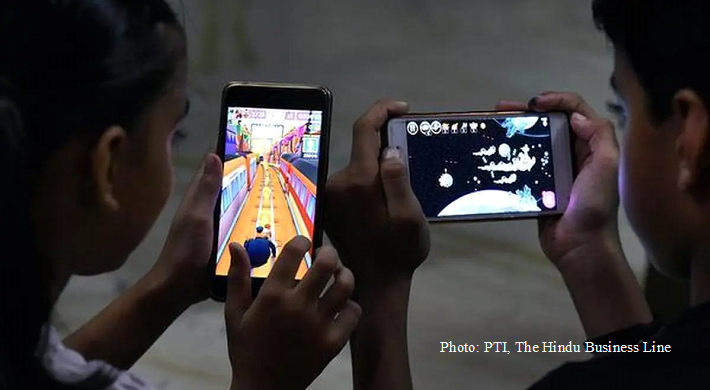
The debate over children’s access to social media has entered a new phase worldwide. Governments are moving towards age restrictions, while technology companies are being pushed to strengthen age assurance, parental controls and safer platform design. Meta, in a US lawsuit, has agreed to introduce features for teens to address concerns around addiction and excessive screen time. In India, the Supreme Court recently sought the Centre’s response to a petition seeking safeguards against minors independently maintaining social-media accounts.
The concern is legitimate: children need protection online. But as India considers its response, it should also consider whether a blanket social media ban could deepen existing digital inequalities and widen gaps in children’s opportunities to participate meaningfully online.
Use of social media
For much of the past decade, India’s digital agenda has focused on narrowing the access divide through affordable mobile internet and smartphones. A recent report (Ganguly et al., 2026), based on the India Human Development Survey (IHDS-3, 2022-24), shows that 95.1 per cent of households own a mobile phone. Yet access to, and participation in, the digital world remain unequal among children and teenagers.
For many young people, social media and other online platforms are spaces for communication, information, creativity and social connection.
At the same time, India lacks evidence on how children use social media and which online experiences are harmful. ASER 2024 reports that 57 per cent of rural adolescents aged 14-16 who can use a smartphone used it for an education-related activity in the preceding week, but it does not identify the platforms used. The same platforms can serve educational and recreational purposes, making the boundary between “useful” and “harmful” online experiences less clear-cut.
The inequalities become clearer in social media use. The IHDS-3 report shows that among children aged 13-16 years, 65.3 per cent have access to a mobile device, 37.8 per cent use the internet, and 21.3 per cent use social media. Social media use is higher among boys than girls (26.4 per cent versus 16 per cent) and declines sharply from metropolitan areas (30.7 per cent) to rural India (18.5 per cent). It increases steadily with parental education.
Children do not begin their digital lives from the same starting line. A teenager from a metropolitan, higher-educated household inhabits a different digital environment from a first-generation internet user in a rural household. A blanket restriction could therefore reduce exposure to online harms for some children while simultaneously removing opportunities for digital participation for others. Uniform regulation may not produce uniform outcomes in an unequal society.
None of this diminishes the harms associated with social media. Protecting children from cyberbullying, harmful content, addictive platform design, online exploitation and excessive use remains an important policy objective. But protection and participation should not be treated as competing goals.
The emerging policy landscape offers more tools than a simple choice between unrestricted access and a blanket ban. Age assurance, parental controls, safer defaults, limits on harmful platform design and greater accountability for technology companies are increasingly part of the policy toolkit. For India, the challenge is to determine which combination of safeguards can reduce harm while preserving opportunities for children to learn, connect and develop digital capabilities. India should also assess the distributional consequences of any restriction — who is likely to lose access, who can compensate through other devices or support, and which children are already least able to participate online. These questions are central to equitable digital policy.
India’s first digital divide was about who could get online. The next is about who can participate meaningfully and safely once connected. The goal should be to protect children online while keeping the door open to opportunities for learning, skill development and connection that the digital world can offer.
Ganguly is Associate Fellow, NCAER–National Data Innovation Centre, and Agarwal is Policy Analyst at The Quantum Hub. Views are personal.