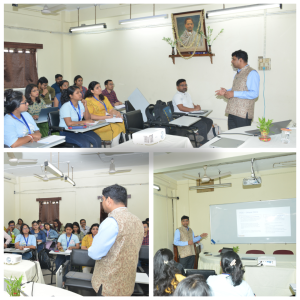
Dr Debasis Barik, Senior Fellow at NCAER, served as a resource person at a 3-day workshop, “Decoding Large-Scale Public Health Data: Structure and Evaluation Strategies,” organised by the Population Studies Unit at the Indian Statistical Institute, Kolkata, from 10 to 12 February 2026.
The workshop convened undergraduate and postgraduate students, PhD scholars, researchers, early-career professionals, and faculty from across India to strengthen capacities in the use of secondary datasets for public health and demography research. Sessions covered epidemiological measures, sampling procedures and weights, statistical models, and introduced key datasets including the National Family Health Survey, the National Sample Survey, and the India Human Development Survey.
Dr Barik’s lecture focused on using multiple waves of the India Human Development Survey panel for demography and health research, with emphasis on leveraging the panel structure for longitudinal analysis.
NCAER faculty member Dr. Debasis Barik was invited as a Resource Person to deliver the residential Lecture on “Technical aspects of designing a questionnaire scientifically for socio-economic and demographic Survey” at JNU campus, organized by UGC-MMTTC, JNU.
UGC-Malaviya Mission Teacher Training Centre, JNU organized a Residential course of 8th Refresher Course in Research Methodology in Social Sciences (IDC) from December 10th to 23rd, 2025 for faculty members (Assistant and Associate Professor) from different Universities/Colleges throughout India.
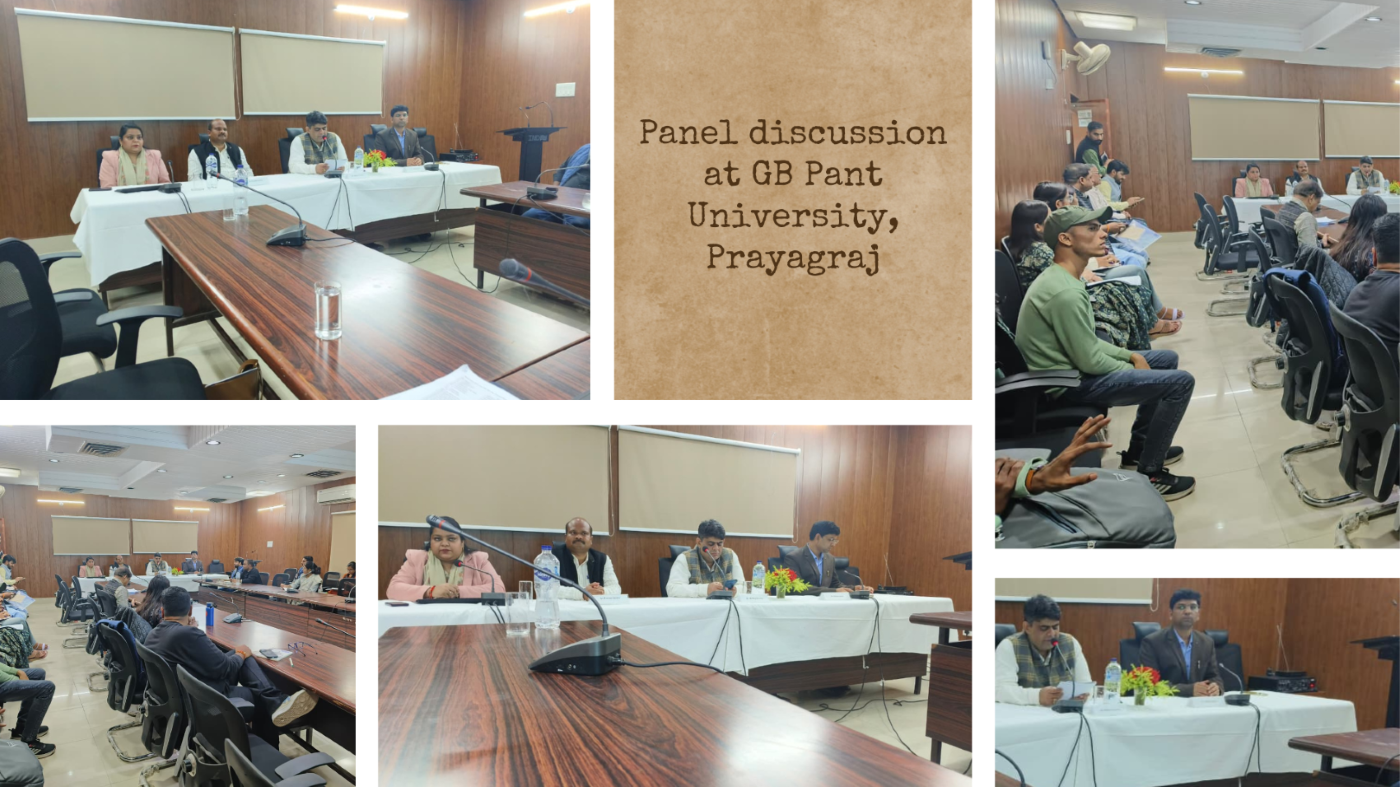
NCAER faculty member Dr. Debasis Barik was invited as a panellist in one of the ICSSR Sponsored Two Days National Seminar’s thematic sessions organized by Govind Ballabh Pant Social Science Institute in collaboration with the Directorate of Census Operations, Uttar Pradesh, and the Office of Registrar General of India, Ministry of Home Affairs, Government of India.
The seminar focused on the importance of large-scale data to build an Inclusive and Sustainable policy that support overall development of India. India has developed an extensive ecosystem of data collection, spanning demographic, socio-economic, health, and environmental dimensions. These datasets are pivotal in understanding trends, addressing inequities, and framing evidence-based policies. India’s data collection has expanded significantly post-independence, with surveys like the Census of India, Sample Registration System (SRS), Civil Registration System (CRS), National Sample Survey (NSS), and Environmental Statistics becoming integral to policy design. Collaborations with international organizations have introduced landmark initiatives such as the National Family Health Survey (NFHS), Longitudinal Ageing Survey of India (LASI), and Indian Human Development Survey (IHDS), providing critical insights into health, nutrition, fertility, and socio-economic conditions.
Despite the availability of these rich datasets, a significant gap persists in their utilization due to limited awareness about their design, scope, and applications. Policymakers, researchers, and scholars often struggle to navigate the complexities of these data systems, resulting in missed opportunities for data-driven solutions to India’s pressing challenges. This seminar aimed at addressing some of these gaps by fostering a deeper understanding of the strengths, features, and limitations of India’s key population and environmental datasets. By exploring the historical evolution of India’s data landscape, the seminar underlined the importance of demographic and environmental data in shaping inclusive development. It emphasized how effectively leveraging these datasets can catalyze progress in addressing public health challenges, socio-economic disparities, and environmental sustainability. This initiative sought to empower stakeholders with the knowledge and tools to harness India’s rich data ecosystem, ensuring policies and programs are grounded in evidence and tailored to the country’s unique needs.
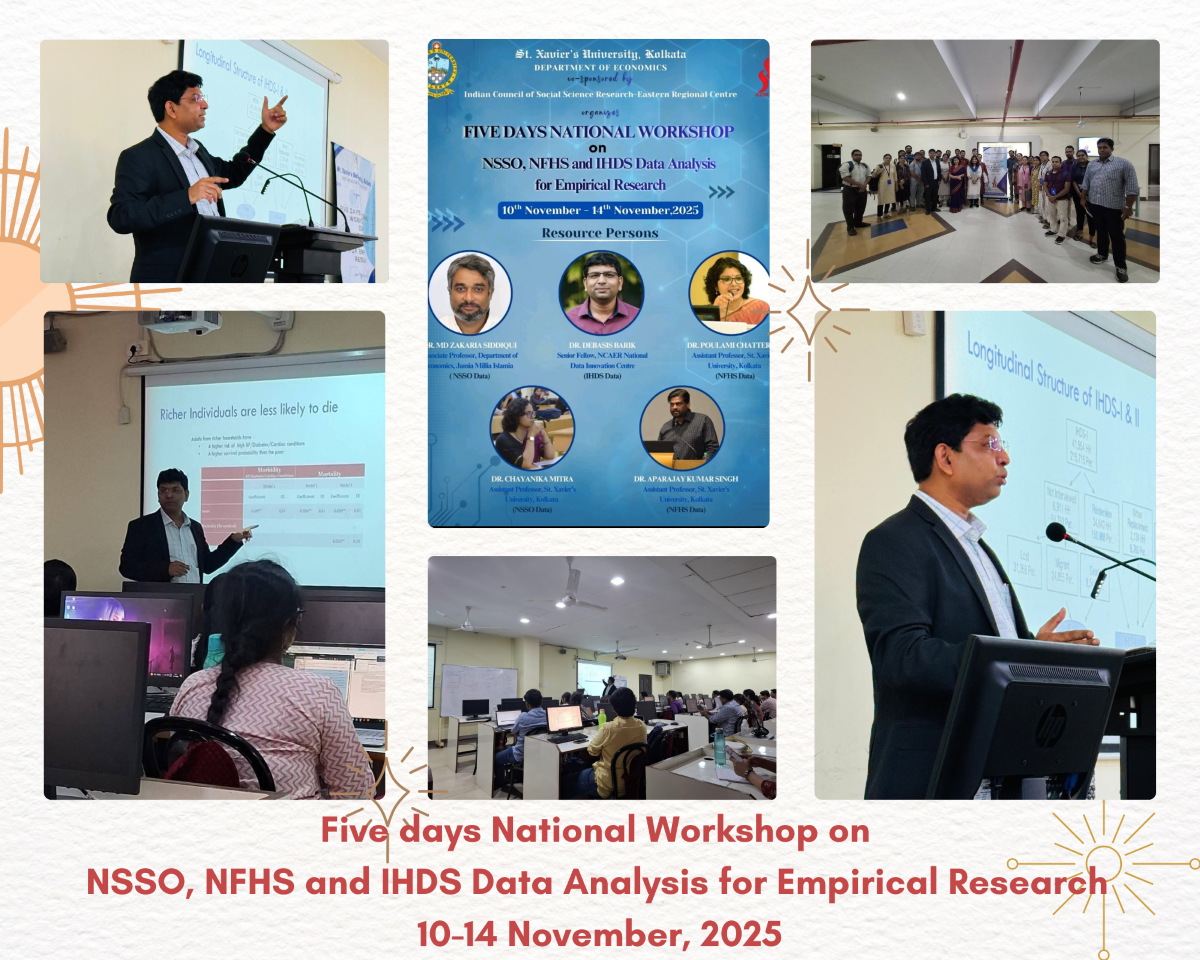
Dr Debasis Barik served as a resource person in a workshop “Five Days National Workshop on NSSO, NFHS and IHDS Data: Analysis for Empirical Research” organised by the Department of Economics, St. Xavier’s University, Kolkata, held in Kolkata Campus on November 11, 2025.
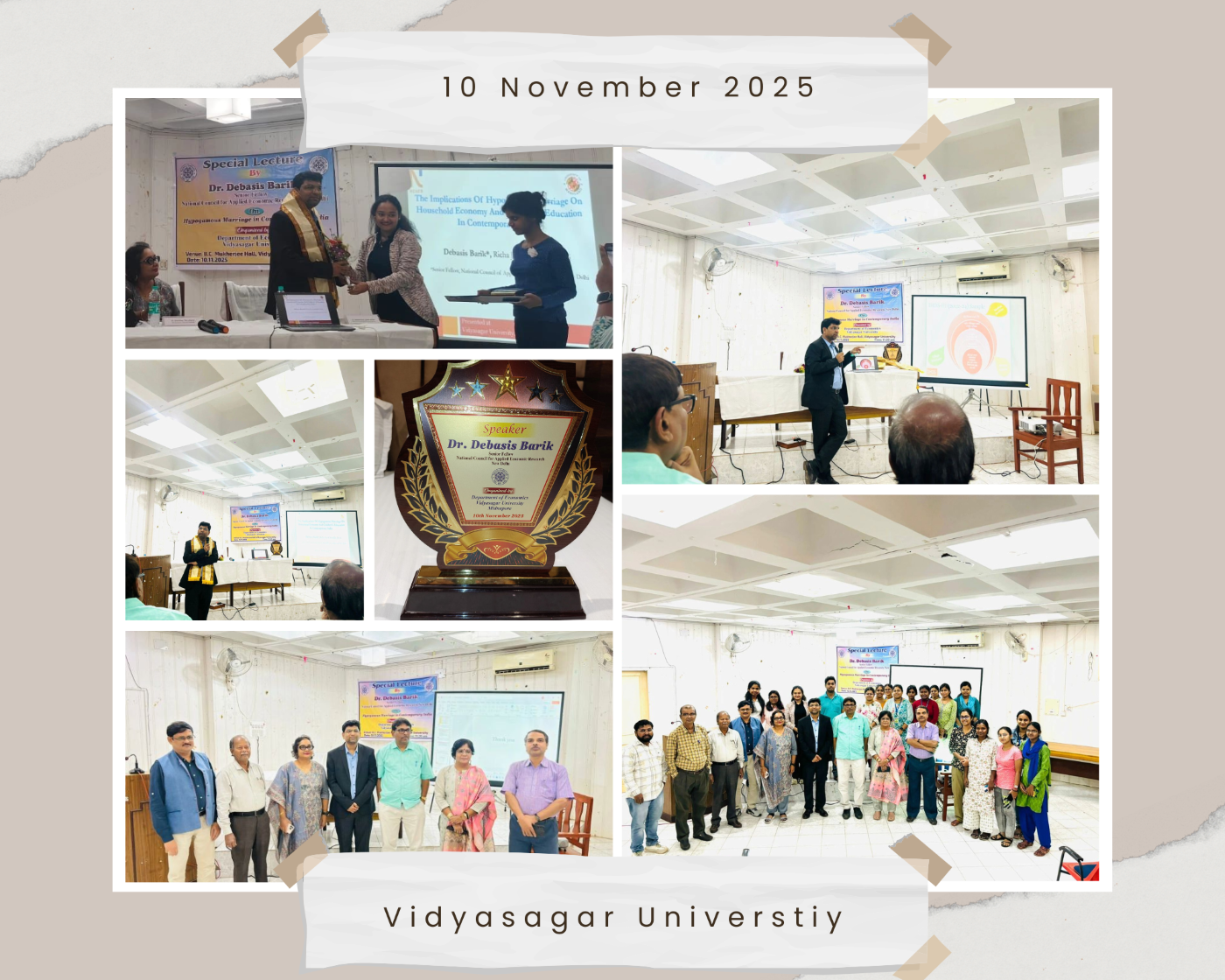
NCAER faculty member Dr. Debasis Barik delivered a special lecture at the Vidyasagar University, West Bengal. He spoke on the Implications of Hypogamous Marriage on Household Economy and Children’s Education in Contemporary India. This was organized by Department of Economics, Vidyasagar University, Midnapore.