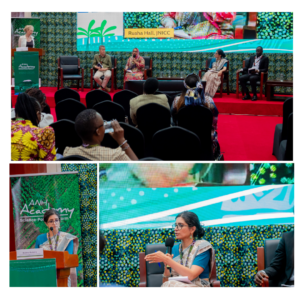
Dr. Reshma Roshania, Associate Fellow with the National Data Innovation Centre, presented at the 10th Annual Agriculture, Nutrition and Health Academy Week held in Dar es Salaam, Tanzania at the end of June. In a session focused on the impact of policies and programmes on healthy diets, nutrition security, and agricultural production, she presented a paper co-authored with Dr. Sonalde Desai entitled “Expansion of the Public Distribution System and Impacts on Household Food Consumption: Longitudinal Evidence From India”. Dr. Roshania also chaired the conference session on Gender, Equity and Empowerment.
The ANH Academy Week is a series of annual events that bring together the community of researchers, practitioners and policymakers working at the intersection of agriculture, food systems, nutrition, and health. The objective of the ANH Academy Week is to foster knowledge exchange, innovation and learning around interdisciplinary ANH research.
The ANH Academy Week format consists of two interlinked components:
-
- Learning Labs – a series of training workshops in interdisciplinary skills and knowledge for agriculture, nutrition and health research and practice;
- Research Conference – an abstract-driven symposium featuring oral presentations, poster sessions and keynote speeches, as well as plenary round tables, side events and working group discussions.
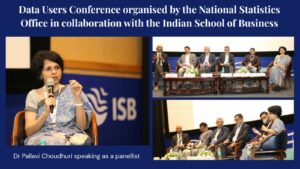
The National Statistics Office (NSO) under the Ministry of Statistics and Programme Implementation (MoSPI), in collaboration with the Indian School of Business (ISB), organized a Data Users Conference on 27th May 2025. Dr Pallavi Choudhuri (NCAER) served as a panellist, highlighting the growing female work participation in the unincorporated sector & the value of forward-looking private sector CAPEX data for policy & research.
The panel moderated by the Dr. Ashwini Chhatre (ISB), featuring Dr. Pallavi Choudhuri (NCAER), Shri Dharmakirti Joshi (CRISIL), Dr. M. Suresh Babu (MIDS), Prof. Rishi Kumar (BITS Pilani), and Prof. C. Veeramani (CDS). The discussions highlighted the growing value of CAPEX data for policy, research, and forecasting. The panelists also deliberated on the importance of micro-data for the unorganized sector in shaping policy reform.
The conference aimed to deepen the interaction between data producers and users through discussion on two newly released surveys—the Annual Survey of Unincorporated Sector Enterprises (ASUSE) 2023–24 and the Forward-Looking Survey on Private Sector Capital Expenditure (CAPEX) Investment Intentions.
More Details:

Professor Sonalde Desai presented paper titled “Rethinking Social Safety Nets in a Changing Society: Evidence from India Human Development Survey” at the Center for the Advanced Study of India (CASI), University of Philadelphia in partnership with the South Asia Center & Dept of Sociology.
About the Seminar:
With a growing economy and declining poverty, India faces a curious challenge in providing a social safety net to its citizens. Using data from three rounds of the India Human Development Survey (IHDS), collected in 2004-05, 2011-12, and 2022-24, this seminar shows that households face considerable transition in and out of poverty as the economy grows. Historically, India’s approach to social safety nets has involved identifying the poor and providing them with priority access to various social protection programs that include both in-kind and cash assistance—however, the nature of poverty changes with economic growth. This churn in households’ economic circumstances makes it difficult to identify and target the poor precisely.
Using unique, newly collected panel data, Professor Desai makes three observations about India’s anti-poverty programs: (1) Identification of households as poor (now dubbed priority households) relies on identification exercises carried out every 10-15 years and assumes that poverty status is relatively static. However, results presented in this seminar will document a substantial transition in and out of poverty. (2) This ex-ante identification of needy households leads to relatively weak correlation between households’ actual economic status and access to social safety nets. This should not be assumed to be an example of elite capture but rather an artefact of a static program design. (3) Social safety nets may need to be redesigned in a way that is responsive to changing economic conditions and unexpected events, both at an individual and at a community level.
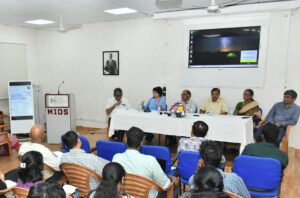
Dr. Pallavi Choudhuri, Senior Fellow and Deputy Director at the NCAER – National Data Innovation Centre, participated as a panelist at the National Workshop on Longitudinal Surveys in India: Lessons and Challenges, hosted by the Madras Institute of Development Studies (MIDS) and the Tamil Nadu Household Panel Survey (TNHPS).
As a panel expert, Dr. Choudhuri shared insights on the evolving landscape of longitudinal data collection, emphasizing innovations in survey methodology and the importance of maintaining high data quality. Drawing from her extensive experience with the India Human Development Survey (IHDS), she highlighted how longitudinal research plays a critical role in understanding social and economic changes over time. She also addressed key challenges in panel data retention and the integration of new methodologies to enhance data reliability.
The discussion, moderated by P C Mohanan, Chairperson of the Kerala Statistical Commission, brought together experts from leading research institutions. Other panelists included:
- T V Sekher, Professor and Head, International Institute for Population Sciences (IIPS), Mumbai
- Aloke Kar, ISS (Retired), Visiting Scientist (Honorary), SOSU-ISI Kolkata
- Brinda Viswanathan, Professor and Dean of Research, Madras School of Economics
- S Chandrasekhar, Professor, Indira Gandhi Institute of Development Research (IGIDR), Mumbai
The workshop facilitated discussions on the significance of longitudinal surveys in informing evidence-based policymaking. Dr. Choudhuri’s participation reinforced NCAER’s commitment to advancing high-quality research methodologies and fostering data-driven policy discussions.
Day 2 of the event featured expert presentations on various longitudinal surveys across India. Dr. Pallavi opened the session with an insightful presentation on the technical aspects of the three waves of the India Human Development Survey (IHDS), highlighting key methodological advancements, challenges, and learnings from the survey design and implementation.
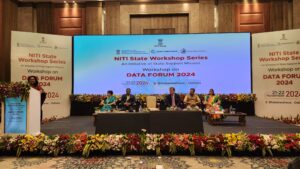
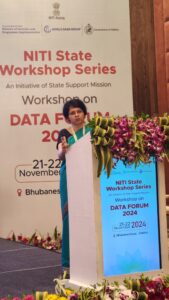 NITI Aayog hosted the Data Forum 2024, a collaborative initiative with the World Bank, the Ministry of Statistics and Programme Implementation (MoSPI), and the Government of Odisha, on November 21-22, Bhubaneshwar. The engagement brought together experts to explore innovative strategies for leveraging data in development, with a particular focus on gender outcomes.
Dr Pallavi Choudhuri, Senior Fellow & Deputy Director at NDIC-NCAER, spoke at the session “Data Systems for Achieving the Sustainable Development Goals (SDGs),” emphasizing the role of data-driven policymaking in improving gender equality, including the need to examine both granular level survey and administrative data. The session, chaired by Ms. Anu Garg, Development Commissioner, Government of Odisha, began with a presentation by Christopher Garroway, Chief Economist, UN RCO (Resident Coordinator Office), which set the stage for the rest of the speakers.
Key takeaways from the two-day forum included leveraging diverse data sources to drive development, learning from global best practices, and highlighting impactful initiatives by Central and State ministries. Participants highlighted the critical role of robust data systems in shaping policies aligned with SDGs, particularly in addressing inequalities and fostering sustainable growth.
The Data Forum 2024 showcased the power of collaboration and the transformative potential of data in achieving equitable and impactful development outcomes.